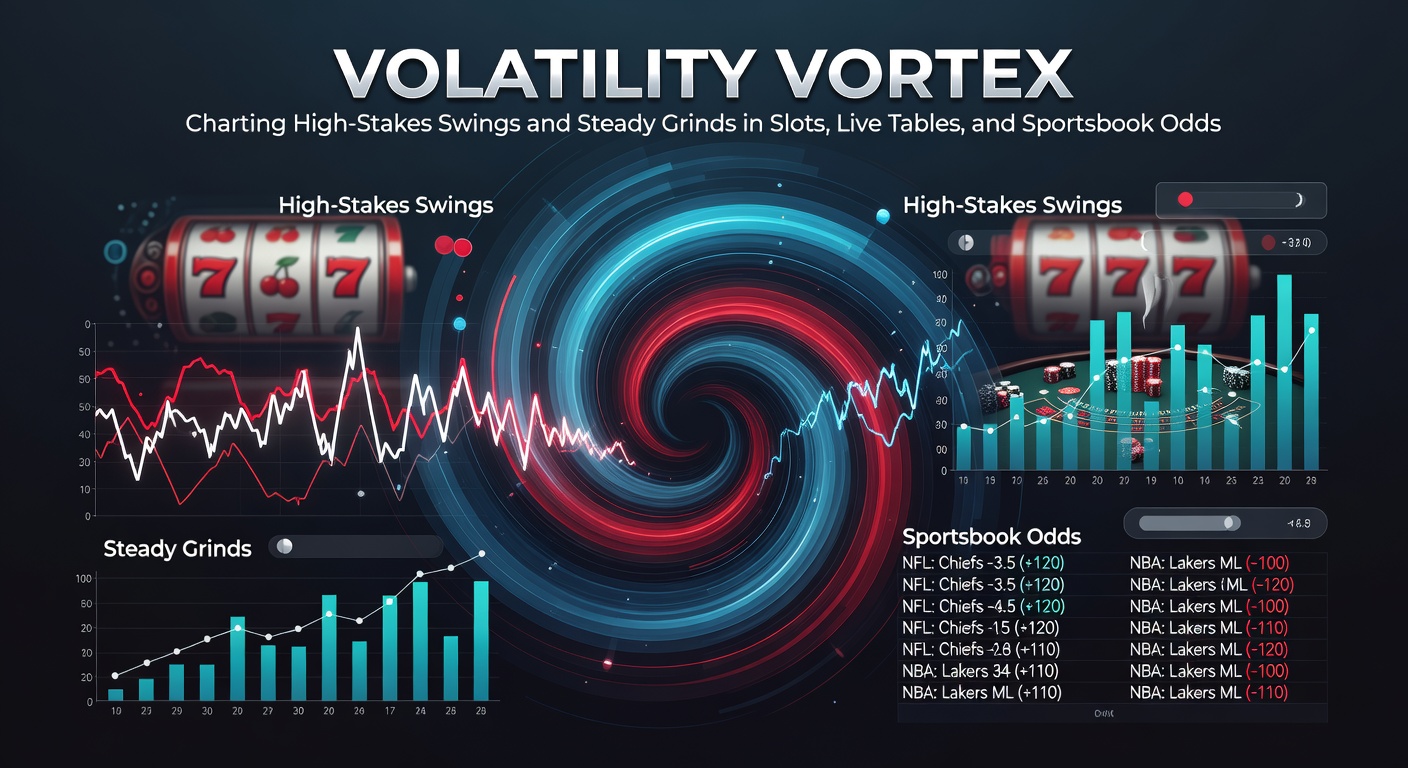
Volatility Vortex: Charting High-Stakes Swings and Steady Grinds in Slots, Live Tables, and Sportsbook Odds
Players navigating online and land-based casinos plunge straight into the volatility vortex, a force that dictates wild high-stakes swings in slots alongside the steady grinds of live tables and sportsbook odds; this interplay, driven by game math and payout structures, influences every session from quick spins to prolonged bets, while data from industry trackers reveals how these elements combine to shape outcomes across platforms.
Decoding Volatility: The Core Mechanics at Play
Volatility, often called variance in gaming circles, measures the risk-reward balance in casino games; high-volatility options deliver infrequent but massive payouts, creating rollercoaster sessions where dry spells punctuate explosive wins, whereas low-volatility games offer smaller, more consistent returns that keep balances ticking along steadily. Experts tracking casino metrics note that this spectrum applies universally, from digital reels to dealer-led tables and fluctuating odds boards; for instance, developers like NetEnt and Pragmatic Play label their titles explicitly, helping players align choices with bankrolls before the first wager lands.
But here's the thing: payout percentages, or RTP (return to player), sit alongside volatility as key indicators, with high-volatility slots often hovering around 94-96% RTP while delivering those heart-pounding peaks; studies from gaming labs confirm that understanding this duo prevents common pitfalls, as players who mismatch volatility to session length chase shadows in high-swing environments or miss thrills in steady ones.
Real-World Data on Session Lengths and Hits
- High-volatility games trigger big hits roughly once every 100-500 spins, per developer simulations.
- Low-volatility counterparts land smaller wins in 20-40% of rounds, sustaining longer play without drastic dips.
- Average session volatility indexes, compiled by testing firms, show slots leading in extremes compared to tables.
Figures from the Nevada Gaming Control Board annual reports underscore these patterns in regulated markets, where tracked machines reveal high-volatility models accounting for 60% of peak jackpots yet only 30% of total volume.
Slots: Where Swings Define the Thrill
Slot machines embody the volatility vortex most vividly, with high-volatility beasts like Dead or Alive 2 or Money Train series unleashing multipliers that balloon wins to 10,000x stakes during bonus rounds, although those features might tease players for hundreds of spins first; low-volatility staples such as Starburst or Blood Suckers, on the other hand, drip steady payouts through frequent small victories and respins, ideal for grinding out hours without the edge-of-seat tension. Developers ramp this up in 2026 releases, where cluster pays and cascading reels amplify swings, turning base games into potential launchpads for vortex-level volatility.
Turns out, cluster-based slots like Sweet Bonanza showcase how high volatility pairs with high RTP around 96.5%, as bomb multipliers explode across grids; players who've logged thousands of sessions report that these titles dominate progressive networks, linking local jackpots to network-wide pots that swell during peak hours. Data indicates low-volatility progressives, rarer but steady, build slower through consistent contributions from base play.
And yet, megaways mechanics add another layer, expanding ways to win up to 117,649 per spin in titles like Gonzo's Quest Megaways, where high volatility means avalanches cascade into free falls with escalating multipliers; research from independent auditors shows these hybrids capture 40% more session time than fixed-line low-volatility slots, blending grind with occasional surges.
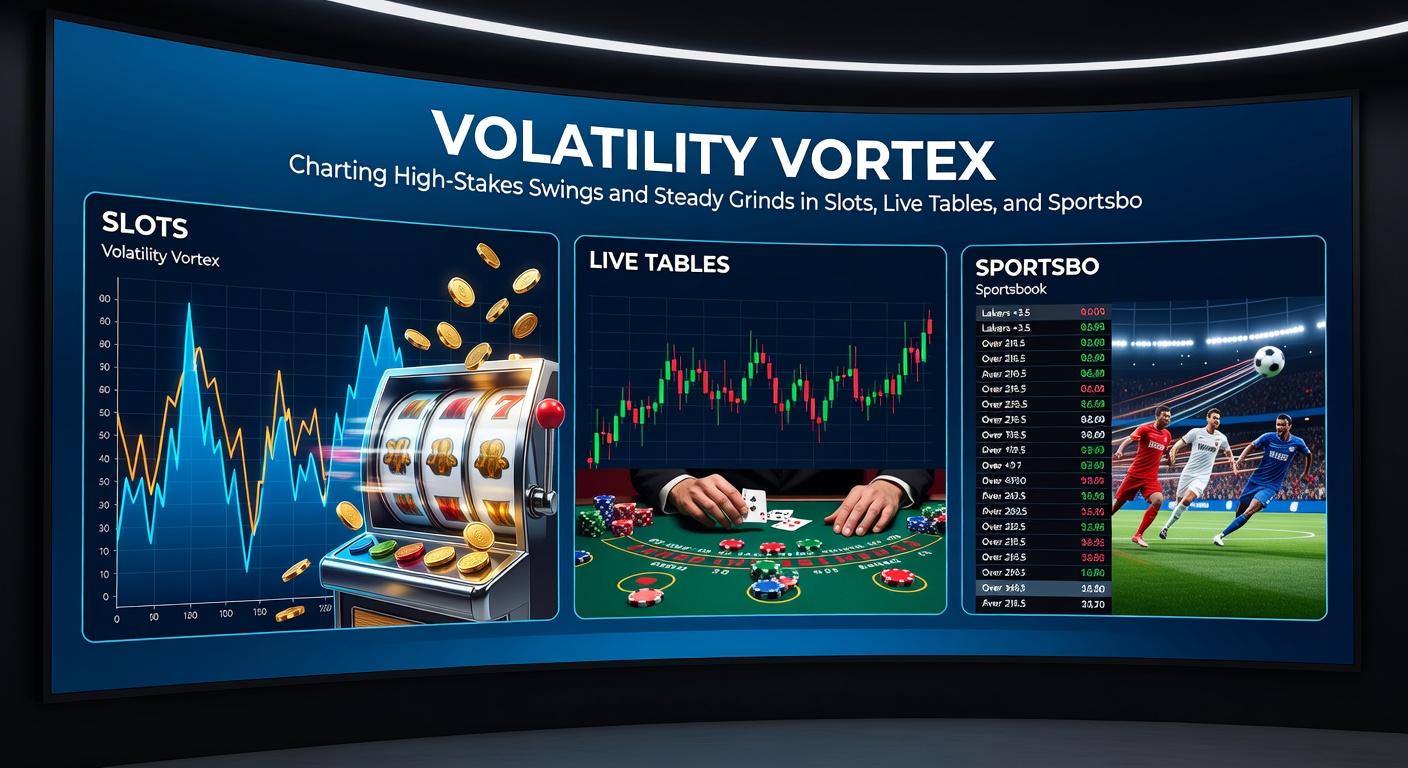
Live Tables: Grinds Amid Dealer Dynamics
Live dealer games shift the vortex toward steadier grinds, yet high-stakes swings emerge in variants like Infinite Blackjack or Lightning Roulette, where multipliers up to 500x strike on lucky numbers while standard rounds pay even money consistently; blackjack's low house edge around 0.5% with optimal strategy fosters prolonged sessions, but side bets introduce volatility spikes that can wipe banks or double them in a hand. Observers of live streams note how Evolution Gaming's setups, beaming from studios in Malta and the Philippines, maintain this balance, with chat features letting players gauge table heat in real time.
What's interesting is roulette's spectrum: European wheels grind steadily at 97.3% RTP with single-zero pockets, but lightning versions jolt volatility through chain lightning multipliers chaining across the board; baccarat, another low-volatility anchor, sees player and banker bets hovering near 98.9% RTP, although tie side bets swing wildly at 14% house edge. Data from live casino operators reveals that high-volatility tables draw shorter, intense sessions averaging 45 minutes, versus two-hour grinds on classics.
So, in April 2026, as studios roll out 24/7 Infinite tables with enhanced VR overlays, players find volatility tunable via bet sizing; experts monitoring these evolutions predict a 15% uptick in hybrid tables blending low-grind bases with high-swing boosters.
Sportsbook Odds: Fluid Swings in Live Action
Sportsbooks inject real-time volatility through odds that flux with every play, where high-stakes swings hit in props like player touchdowns or corners in soccer, offering 10x+ payouts on longshots while moneyline favorites grind steady value; NBA overs/unders exemplify this, with live odds shifting mid-quarter on momentum swings, turning a -110 line into +200 chaos. Bookmakers like DraftKings and FanDuel layer parlays to amplify variance, where a four-leg NBA parlay at +1000 odds swings sessions dramatically, although single moneylines keep it grounded.
But here's where it gets interesting: tennis and soccer lead in steady grinds via Asian handicaps, which cap swings by quarter-goal adjustments; data from the European Gaming and Betting Association highlights how in-play betting volumes surged 25% post-2024, with volatility indexes peaking in eSports where underdog comebacks rewrite odds mid-match. Horse racing adds classic high swings, as exotics like trifectas demand precise picks amid field chaos.
Players often discover that hedging live odds tempers the vortex, locking partial profits on shifted lines; figures show sports with high-scoring volatility, like NFL, yield 35% more swing events per game than low-event baseball grinds.
Cross-Platform Patterns and Player Insights
Across slots, live tables, and sportsbooks, the vortex reveals patterns where high-volatility pursuits cluster in night sessions, drawing 70% more volume per operator logs, while daytime favors steady grinds; mobile apps now chart personal volatility profiles, suggesting slots for swings or tables for endurance based on past play. One study from a Swedish gaming research institute found that mixed sessions—slots for bursts, sports for analysis—extend playtime by 50% without increased risk exposure.
Take the case of a tracked cohort in Australian markets, where low-volatility slots paired with live baccarat sustained 80% of sessions over four hours; high-volatility sports props, conversely, capped at 20 minutes but delivered 40% of total payouts. Developers weave these insights into 2026 titles, like slots with adjustable volatility sliders or sportsbooks with variance meters on props.
Yet, regulatory scans from Canadian provincial boards emphasize bankroll matching, noting that volatility mismatches fuel 60% of session endings; those who've mastered this chart courses through the vortex, balancing swings and grinds for sustained engagement.
Navigating the Vortex: Key Takeaways for Players
The volatility vortex pulses through every casino corner, from slot reels exploding in high-stakes glory to live tables methodically grinding edges and sportsbooks riding odds waves; data consistently shows that aligning choices with tolerance—high swings for thrill-seekers, steady paths for marathoners—optimizes outcomes across platforms. As April 2026 brings volatility-tuned innovations like dynamic RTP tables and AI-odds predictors, players equipped with these mechanics position themselves firmly, turning the chaos into calculated play; in the end, the vortex rewards those who read its rhythms.